Beyond Convenience: How Smart Coffee Stations Are Reshaping the Urban Workplace Ecosystem The strategic installation of three JK86 self-service coffee vending machines across this high-rise office building has quietly transformed not only the daily r...
Contact Us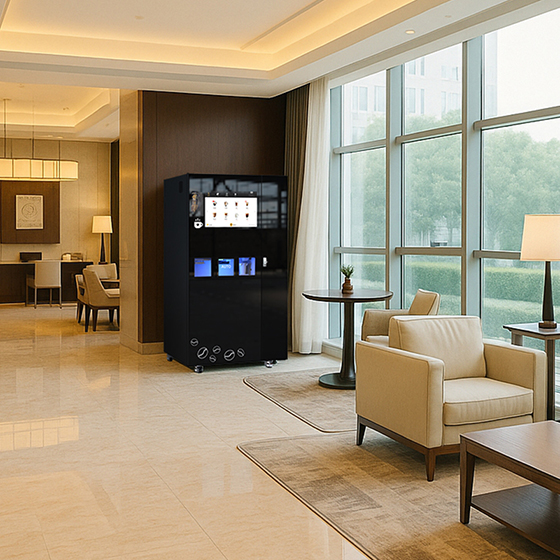
Beyond Convenience: How Smart Coffee Stations Are Reshaping the Urban Workplace Ecosystem
The strategic installation of three JK86 self-service coffee vending machines across this high-rise office building has quietly transformed not only the daily rhythms of its workforce but also the operational dynamics of the building itself. By positioning machines in key zones—the high-traffic lobby, the mid-level break area on the 15th floor, and the central cafeteria—the deployment follows a hierarchical service logic that mirrors the flow of modern work life: a quick grab-and-go option for those rushing in, a nearby refreshment point for focus breaks, and a complementary choice alongside meal services.
Operational data collected over six months reveals more than just popularity—it uncovers behavioral patterns of productivity and recharge. The pronounced sales spikes between 9–10 AM and 3–4 PM correspond not only to traditional break times but also to natural energy dips in the work cycle. The ability to access a consistent, quality espresso or latte within 30 seconds—without leaving the building—has effectively shortened “coffee run” downtime from an average of 12–15 minutes to under a minute, reclaiming valuable time for both employees and employers.
From a workplace wellness perspective, the machines serve as micro-recharge stations, offering a seamless transition between intensive work blocks. Employees report greater ability to maintain focus and momentum, knowing a reliable coffee break is just steps away. This has translated into broader sentiment improvements, with many noting the convenience as a “small but meaningful perk” in anonymous satisfaction surveys.
Building management has observed several structural benefits beyond direct revenue. The reduction in foot traffic to ground-floor cafes during peak hours has alleviated elevator congestion and lobby crowding, contributing to smoother morning entry flows. Furthermore, the distribution of beverage access across multiple floors has helped balance break-time movement, subtly supporting social distancing and space utilization efficiency—a valued advantage in post-pandemic office design.
Financially, the model proves sustainably profitable. With an average daily sale of 80+ cups and minimal maintenance or staffing overhead, the machines deliver a steady revenue stream while operating as a cost-neutral amenity that enhances tenant satisfaction. For leasing teams, this offering has emerged as a tangible differentiator in competitive Class-A office markets, where tenant retention increasingly depends on curated daily experiences.
Looking forward, there is potential to integrate these stations into the building’s smart ecosystem—such as linking machine usage data with conference room bookings to anticipate demand, or offering “coffee credits” as part of corporate wellness or visitor welcome programs. Seasonal drink variations or limited-time offerings could further engage users while gathering preference data to refine service.
In an era where the office is being reimagined as a destination for collaboration, focus, and well-being, the JK86 machines exemplify how thoughtful infrastructure can enhance everyday efficiency without disrupting workflow. They represent more than a coffee solution—they are a quiet, intelligent layer of the modern workplace, one cup at a time.
 EN
EN
 AR
AR
 BG
BG
 HR
HR
 CS
CS
 DA
DA
 NL
NL
 FI
FI
 FR
FR
 DE
DE
 EL
EL
 HI
HI
 IT
IT
 JA
JA
 KO
KO
 NO
NO
 PL
PL
 PT
PT
 RO
RO
 RU
RU
 ES
ES
 SV
SV
 TL
TL
 ID
ID
 SR
SR
 VI
VI
 HU
HU
 MT
MT
 TH
TH
 TR
TR
 FA
FA
 MS
MS
 GA
GA
 BE
BE
 BN
BN
 LO
LO
 LA
LA
 NE
NE
 MY
MY